Japan Travel Guide 2026: The Ultimate Complete Guide for Americans
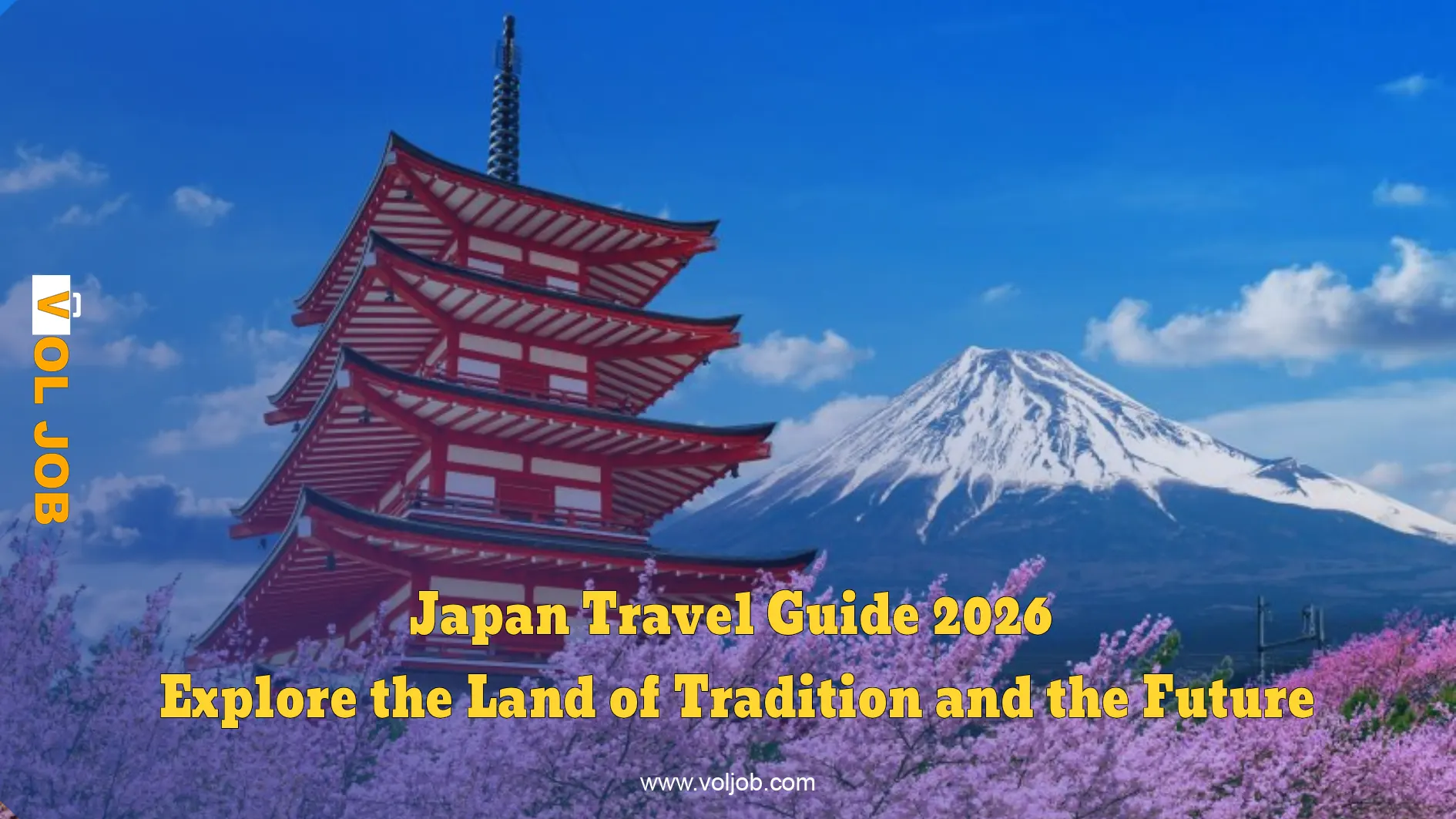
Japan Travel Guide 2026: Explore the Land of Tradition and the Future

Japan tops the list of most searched travel destinations in 2026 — and for good reason. No other country on earth blends ancient tradition with cutting-edge modernity quite like it. From neon-lit city streets to thousand-year-old temples, from snow-capped mountains to tropical beaches, this extraordinary destination offers an experience unlike anything else on the planet.
Whether you’re an American traveler planning your first trip to Asia or a seasoned explorer looking for a new adventure, this Japan travel guide for 2026 covers everything you need: visa requirements, top destinations, travel tips, estimated costs, and the best experiences money can buy.
Let’s dive in.
Why Visit Japan in 2026?
2026 is shaping up to be one of the best years ever to visit the Land of the Rising Sun. Here’s why:
- Tourism EXPO Japan 2026 is drawing global attention to the country’s top destinations
- The government has continued streamlining visa procedures for international visitors
- The Japanese yen remains relatively favorable for American travelers, making your dollar go further
- New bullet train routes and expanded transportation networks make getting around easier than ever
- The country continues to invest in sustainable tourism, offering eco-friendly travel experiences
The country received over 35 million international visitors in recent years, and the numbers keep climbing. Don’t miss your chance to experience it at its finest.
Japan Visa Requirements for Americans in 2026
Good news for US passport holders — Americans do not need a visa to visit the country for tourism stays of up to 90 days. This visa-free arrangement makes it one of the most accessible destinations in Asia for American travelers.
Here’s what you need to know before you go:
Visa-Free Entry for Americans
- Stay duration: Up to 90 days per visit
- Purpose: Tourism, visiting family or friends, short-term business
- No advance application required — simply arrive and present your passport
Passport Requirements
- Your US passport must be valid for the entire duration of your stay
- It is strongly recommended to have at least 6 months of validity remaining beyond your travel dates
- Your passport must have at least one blank page for entry stamps
What You’ll Need at Immigration
- Return or onward ticket proving you plan to leave the country
- Proof of accommodation (hotel reservations, Airbnb confirmation, etc.)
- Sufficient funds for your stay (credit cards or cash)
- Completed arrival card (provided on your flight or at the airport)
Japan eVISA (For Non-Exempt Nationalities)
If you’re traveling with companions from countries that are not visa-exempt, the country offers a convenient electronic visa (eVISA) system through the Ministry of Foreign Affairs. Applications can be submitted entirely online, eliminating the need to visit an embassy in person.
Even as a visa-free American traveler, always check the official Japanese Embassy website before your trip for the most up-to-date entry requirements. Rules can change, and it’s always better to be prepared.
Best Time to Visit Japan
This is a year-round destination, but the experience varies dramatically depending on when you go. Here’s a seasonal breakdown to help you choose the perfect time for your trip:
Spring (March – May) — Cherry Blossom Season
This is arguably the most magical time to visit. The sakura (cherry blossoms) transform parks, riversides, and temple grounds into breathtaking pink canvases. Peak bloom typically occurs in late March to early April in Tokyo and Kyoto.
- Best for: Iconic cherry blossom photos, hanami picnics, mild weather
- Crowds and Cost: HIGH — book accommodation 3–6 months in advance
- Average Temperature: 50–65°F (10–18°C)
Summer (June – August) — Festivals and Fireworks
Summer here is hot and humid, but it’s also festival season. June brings the rainy season (tsuyu), but July and August are packed with incredible matsuri (festivals) and spectacular fireworks displays.
- Best for: Summer festivals, beach trips to Okinawa, hiking in Hokkaido
- Crowds and Cost: HIGH during school holidays (late July – August)
- Average Temperature: 75–90°F (24–32°C)
Autumn (September – November) — Fall Foliage
Autumn rivals spring as the country’s most beautiful season. Koyo (autumn leaf viewing) turns the landscape into a stunning tapestry of red, orange, and gold. Temperatures are pleasant, and the summer crowds have thinned.
- Best for: Foliage viewing, hiking, comfortable sightseeing
- Crowds and Cost: MODERATE to HIGH in November
- Average Temperature: 50–70°F (10–21°C)
Winter (December – February) — Snow and Skiing
Winter brings snow festivals, world-class skiing in Hokkaido and Nagano, and the magical illumination events that light up cities across the country. It’s also the least crowded and most affordable time to visit.
- Best for: Skiing, hot springs (onsen), snow festivals, budget travel
- Crowds and Cost: LOW (except around New Year)
- Average Temperature: 30–45°F (0–7°C)
Top Destinations in Japan for 2026
The country has dozens of incredible cities and regions to explore. Here are the must-visit destinations for your 2026 trip:
1. Tokyo — The City That Never Sleeps
Tokyo is one of the world’s greatest cities — a mind-blowing metropolis of 14 million people where ancient shrines sit alongside futuristic skyscrapers. It’s a city that rewards exploration at every turn.
Top Attractions:
- Shibuya Crossing — The world’s busiest pedestrian crossing, best experienced at night
- Tokyo Skytree — At 2,080 feet, the tallest tower in the country with panoramic views of the city
- Senso-ji Temple in Asakusa — Tokyo’s oldest and most significant Buddhist temple
- Shinjuku — The entertainment district that truly comes alive after dark
- Akihabara — The electric town for anime, manga, and technology enthusiasts
- Harajuku — The epicenter of Japanese youth fashion and street style
- teamLab Borderless — A mind-bending digital art museum unlike anything else on earth
Where to Stay in Tokyo:
- Budget: Capsule hotels in Shinjuku ($30–60/night)
- Mid-range: APA Hotel or Dormy Inn properties ($80–150/night)
- Luxury: Park Hyatt Tokyo or The Peninsula ($400–800+/night)
Getting There from the US: Direct flights from New York (14 hrs), Los Angeles (12 hrs), San Francisco (11 hrs), and Chicago (13 hrs) to Tokyo Narita (NRT) or Haneda (HND).
2. Kyoto — Japan’s Cultural Soul
If Tokyo represents the future, Kyoto represents the soul of the nation. The former imperial capital is home to over 1,600 Buddhist temples, 400 Shinto shrines, and some of the most exquisite traditional culture on the planet.
Top Attractions:
- Fushimi Inari Shrine — The iconic thousands of vermillion torii gates winding up a mountain
- Kinkaku-ji (Golden Pavilion) — A breathtaking Zen Buddhist temple covered in gold leaf
- Arashiyama Bamboo Grove — A surreal walk through towering bamboo stalks
- Gion District — Kyoto’s historic geisha district, perfect for evening strolls
- Nijo Castle — A 17th-century castle with “nightingale floors” that squeak to detect intruders
- Nishiki Market — A narrow, vibrant market known as “Kyoto’s Kitchen”
Rent a kimono in Gion and spend the afternoon exploring the historic streets — an experience that transports you back centuries.
Where to Stay in Kyoto:
- Budget: Guesthouse Soi or similar hostels ($25–50/night)
- Mid-range: Hotel Granvia Kyoto ($100–200/night)
- Luxury: Aman Kyoto or traditional ryokan (from $500/night)
3. Osaka — Japan’s Food Capital
Osaka is the culinary heart of the country, a city where eating is elevated to an art form. Locals live by the phrase “kuidaore” — eat until you drop — and they mean it.
Top Attractions:
- Dotonbori — Osaka’s neon-lit entertainment district, ground zero for street food
- Osaka Castle — A stunning 16th-century castle surrounded by beautiful gardens
- Kuromon Ichiba Market — A bustling market with over 150 vendors selling fresh seafood and local delicacies
- Shinsekai — A retro neighborhood with an old-school, working-class atmosphere
- Universal Studios Japan — One of Asia’s most popular theme parks
Foods You Must Try in Osaka:
- Takoyaki — Crispy octopus balls, Osaka’s most iconic street food
- Okonomiyaki — A savory pancake loaded with toppings
- Kushikatsu — Breaded and deep-fried skewers of meat and vegetables
- Ramen — Osaka-style with rich, flavorful broth
Day Trip from Osaka: Nara (45 min by train) — home to hundreds of freely roaming deer and the massive Todai-ji temple.
4. Hokkaido — Japan’s Wild North
The northernmost main island is a paradise for nature lovers and outdoor enthusiasts. Hokkaido offers some of the most dramatic landscapes in the country, from volcanic mountains to vast wildflower fields.
Top Attractions:
- Niseko — World-renowned ski resort with some of the best powder snow on earth
- Sapporo — Hokkaido’s capital, famous for its beer, ramen, and the iconic Snow Festival
- Furano — Fields of lavender that bloom in July, creating a stunning purple carpet
- Shiretoko National Park — A UNESCO World Heritage Site and one of the last true wildernesses in the country
- Noboribetsu Onsen — One of the top hot spring resorts in the region
Best Time for Hokkaido: Winter (December–March) for skiing, Summer (June–August) for wildflowers and hiking.
5. Hiroshima and Miyajima — History and Spirituality
Hiroshima is one of the most powerful and moving destinations in all of Asia. The city’s remarkable recovery from the 1945 atomic bombing is a testament to human resilience and a message of peace for the world.
Top Attractions:
- Peace Memorial Park and Museum — A profoundly moving tribute to the victims of the atomic bomb
- Atomic Bomb Dome — The preserved ruins that stand as a UNESCO World Heritage Site
- Miyajima Island — Just a short ferry ride away, famous for the “floating” torii gate of Itsukushima Shrine
- Hiroshima-style Okonomiyaki — A layered version of the savory pancake that’s different from Osaka’s style
6. Nagoya — History Meets Innovation
Nagoya is the country’s fourth largest city and an often-overlooked gem that perfectly combines historical significance with industrial innovation.
Top Attractions:
- Nagoya Castle — One of the finest castles in the country with a stunning golden tiger fish (shachi) on its roof
- Toyota Commemorative Museum of Industry and Technology — A fascinating look at the automotive legacy of the region
- Osu Shopping District — A lively district mixing traditional shotengai culture with modern youth fashion
- Atsuta Shrine — One of the most important shrines in the country, home to one of the three imperial treasures
How to Get Around Japan
The transportation system here is legendary for its punctuality, efficiency, and coverage. Here’s how to navigate it:
Japan Rail Pass (JR Pass) — Is It Worth It for Americans?
The Japan Rail Pass is a pre-purchased pass that gives unlimited travel on most JR trains, including the famous Shinkansen (bullet trains). For Americans visiting multiple cities, it often represents excellent value.
- 7-day pass: Approximately $280 USD (adult ordinary class)
- 14-day pass: Approximately $450 USD
- 21-day pass: Approximately $590 USD
It’s worth it if you’re traveling between Tokyo, Kyoto, Osaka, and Hiroshima (or similar multi-city itineraries). The pass must be purchased before you arrive. Order it online through the Japan Rail Pass official site and activate it at a JR office at the airport upon arrival.
IC Cards (Suica / Pasmo)
For local transportation within cities (subway, buses, local trains), get a Suica or Pasmo card — rechargeable IC cards that work like a transit pass across the country. They also work at vending machines, convenience stores, and many restaurants.
Taxis and Ride-Sharing
Local taxis are reliable but expensive. Uber operates in some cities but is limited compared to the US. For most transportation needs, trains and buses are faster and more economical.
Japan Travel Budget: How Much Does It Cost?
The destination has a reputation for being expensive, but the reality is more nuanced. Here’s a realistic daily budget breakdown for American travelers:
- Budget Traveler ($60–90/day): Hostel or capsule hotel, convenience store meals, local transport
- Mid-Range Traveler ($150–250/day): Business hotel, restaurant meals, some activities
- Luxury Traveler ($400+/day): Luxury hotels, fine dining, private tours
Money-Saving Tips:
- Eat at convenience stores — Local konbini (7-Eleven, Lawson, FamilyMart) sell incredible, affordable meals
- Use the JR Pass wisely for intercity travel
- Visit free attractions — Many temples, shrines, parks, and gardens are free or very cheap
- Travel in winter — Off-peak season means lower hotel prices
- Book accommodation in advance — Especially during cherry blossom and autumn foliage seasons
Major Events and Festivals in Japan 2026
The festival calendar is packed year-round. Here are the highlights for 2026:
Tourism EXPO Japan 2026
One of the world’s largest tourism trade events, Tourism EXPO Japan brings together tourism professionals and travelers to explore the future of travel and discover the most exciting destinations across the country. A must-attend for travel enthusiasts.
Gion Matsuri (July) — Kyoto
The Gion Festival in Kyoto is one of the three great festivals in the country and a UNESCO Intangible Cultural Heritage. Held throughout July, its highlight is the spectacular Yamaboko Junko procession on July 17th, featuring elaborately decorated floats parading through Kyoto’s streets.
Sapporo Snow Festival (February) — Hokkaido
Every February, Sapporo transforms into a winter wonderland during the Yuki Matsuri (Snow Festival). Massive ice and snow sculptures — some the size of buildings — fill Odori Park and surrounding areas. It’s one of the most spectacular and unique events in the country.
Awa Odori (August) — Tokushima
The largest dance festival in the country, where over 1 million spectators watch performers in traditional costumes dancing through the streets to the rhythm of shamisen, taiko, and flute.
Hanami (Late March – Early April) — Nationwide
While not a formal festival, cherry blossom viewing (hanami) is the most beloved seasonal tradition in the country. Parks everywhere fill with people eating, drinking, and celebrating under the blooming sakura trees.
Japan Travel Tips: What Americans Need to Know
Cash Is Still King
Despite being a tech-forward country, the local economy is surprisingly cash-heavy. Many smaller restaurants, temples, and rural establishments do not accept credit cards. Always carry sufficient Japanese yen (JPY).
- ATMs: 7-Eleven ATMs and Japan Post ATMs reliably accept foreign cards
- Currency exchange: Best rates are at airport exchange counters or local banks
WiFi and Connectivity
Stay connected with one of these options:
- Pocket WiFi rental — Available at major airports, gives you a portable hotspot ($5–10/day)
- SIM card — Data-only tourist SIMs available at airports ($30–50 for 30 days)
- eSIM — Increasingly popular option for US travelers with compatible phones
Cultural Etiquette for American Travelers
The country has distinct social customs that differ significantly from American culture. Following these shows respect and will greatly enhance your experience:
- Remove shoes when entering homes, traditional restaurants, and many temples
- Don’t eat or drink while walking — it’s considered rude in local culture
- Bow when greeting — a small bow of acknowledgment goes a long way
- Speak quietly on public transportation — trains and buses are notably quiet spaces
- Don’t tip — tipping is not customary and can actually cause offense
- Tattoos: Some onsen (hot spring baths) prohibit guests with visible tattoos
- Chopstick etiquette: Never stick chopsticks upright in rice (it resembles funeral offerings)
Language
While English signage is widely available in major cities and tourist areas, learning a few basic phrases will be warmly appreciated:
- Arigatou gozaimasu — Thank you very much
- Sumimasen — Excuse me / I’m sorry
- Eigo ga hanasemasu ka? — Do you speak English?
Health and Safety
This is one of the safest countries in the world for tourists. Violent crime is extremely rare, and lost items are frequently turned in to local police boxes (koban). That said, the country is located in a seismically active region — familiarize yourself with earthquake safety procedures. Travel insurance is strongly recommended, as local medical care, while excellent, can be expensive for uninsured foreigners.
Working and Volunteering in Japan
This destination is not just for vacationers — it’s also a place of exciting professional and volunteer opportunities, especially in the hospitality and tourism sector.
Jobs in Japan’s Tourism Industry
The booming tourism sector has created significant demand for hospitality professionals. Opportunities exist in hotel and resort management, tour guiding, English language teaching, and international hospitality roles in Tokyo, Osaka, and Kyoto. Interested in working here? Check out our Jobs section for the latest international job opportunities.
Volunteer Opportunities in Japan
The country offers meaningful volunteer opportunities in cultural preservation, environmental conservation in national parks, and community tourism development. Explore our Volunteer Work section for current opportunities across Asia.
Sample Japan Itineraries for American Travelers
7-Day Highlights (First-Time Visitors)
- Days 1–3: Tokyo — city exploration, Shibuya, Asakusa, Shinjuku
- Day 4: Day trip to Nikko or Kamakura
- Day 5: Travel to Kyoto via Shinkansen, Fushimi Inari
- Day 6: Kyoto temples and Arashiyama
- Day 7: Day trip to Nara, return to Tokyo for departure
14-Day Deep Dive
- Days 1–3: Tokyo
- Day 4: Hakone (Mt. Fuji views, onsen)
- Days 5–7: Kyoto
- Day 8: Osaka
- Day 9: Hiroshima and Miyajima
- Days 10–12: Hokkaido (Sapporo, nature)
- Days 13–14: Return to Tokyo, shopping and departure
Frequently Asked Questions About Traveling to Japan
Q: Do Americans need a visa to visit Japan in 2026?
A: No. US citizens can visit visa-free for up to 90 days for tourism purposes. Just bring your valid US passport, return ticket, and proof of accommodation.
Q: What is the best time of year for Americans to visit Japan?
A: Spring (late March to April) for cherry blossoms and autumn (October to November) for fall foliage are the most popular times. Winter is best for budget travelers and skiing enthusiasts.
Q: How much does a trip to Japan cost from the USA?
A: Round-trip flights from major US cities to Tokyo typically range from $600–$1,200 USD. Daily expenses range from $60 (budget) to $250+ (mid-range). A 10-day trip might cost $2,000–$5,000 total including flights.
Q: Is Japan safe for American tourists?
A: Yes. The country consistently ranks as one of the safest in the world for tourists. Petty crime is very low, and visitors are generally welcomed warmly.
Q: Do I need to speak Japanese to visit Japan?
A: Not at all. Major tourist areas have English signage, and many younger locals speak conversational English. Translation apps like Google Translate work well for more complex situations.
Q: Is the Japan Rail Pass worth buying?
A: For Americans doing a multi-city trip (e.g., Tokyo + Kyoto + Osaka + Hiroshima), the 7-day or 14-day JR Pass typically pays for itself. Calculate your expected train journeys before purchasing.
Q: Can I use my US credit card in Japan?
A: Yes, but the country is still heavily cash-based. Always carry Japanese yen for smaller establishments, markets, temples, and rural areas. 7-Eleven ATMs reliably accept US bank cards.
Q: What should I pack for Japan?
A: Comfortable walking shoes, layers for variable weather, a small day backpack, portable WiFi or a SIM card, and yen cash. If visiting in spring or autumn, pack for temperatures ranging from 50–70°F.
Final Thoughts: Why Japan Should Be Your Next Trip
This is one of those rare destinations that genuinely exceeds expectations — no matter how high you set them. It’s a country that surprises you at every turn, whether you’re standing before an ancient temple at dawn, slurping ramen at a tiny counter restaurant, or watching the organized chaos of Shibuya Crossing from above.
For American travelers in 2026, Japan offers an unbeatable combination of accessibility (no visa required), safety, incredible food, cultural depth, and sheer variety of experiences. Whether you have 7 days or 3 weeks, the Land of the Rising Sun will leave you wanting more.
Start planning today — your adventure awaits.
Useful Resources:
- Japanese Ministry of Foreign Affairs — Visa Information
- US Embassy Tokyo — Travel and Visa Information
- Japan National Tourism Organization (JNTO)
- Japan Rail Pass — Official Site
- Tourism EXPO Japan 2026
Looking for jobs or volunteer opportunities in this destination or others? Visit our Travel section and Jobs section for the latest opportunities.