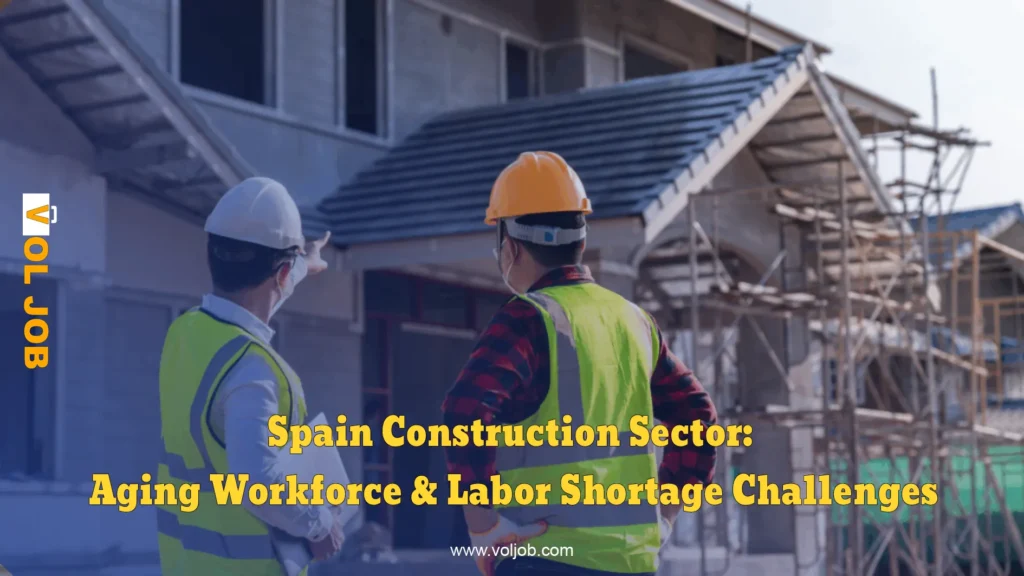
Spain’s construction sector is experiencing a notable paradox. While it records strong growth in activity and employment rates, signs of a structural crisis are looming due to an accelerating aging workforce and difficulties in replacing retiring workers.
According to the “Construction Employment Outlook 2025” report published by the Construction Industry Observatory, approximately 22% of workers in this sector are aged 55 or older. This indicates that one-fifth of the current workforce is expected to retire over the next decade.
Rising Activity vs. Labor Shortage
These demographic challenges coincide with a period of significant recovery for the sector, which ended 2025 with approximately 1.53 million workers—the highest level recorded since 2010. This follows an annual growth rate of 4.5%, outperforming both the services and industrial sectors. However, this upward trend appears insufficient to meet the rising demand for housing units and key infrastructure projects across the country.
Figures show that the average age of workers in the sector has risen to 45.1 years, an increase of nearly three years compared to a decade ago. Meanwhile, young workers (under the age of 30) represent only 10.8% of the total workforce, highlighting a clear gap in generational renewal.
Critical Trades Under Retirement Pressure
The impact of this crisis is particularly evident in several technical and essential occupations. For instance, the average age of truck drivers in the sector is 50.6 years, followed by construction supervisors, plasterers, and machine operators, with an average age approaching 48 years.
Companies are finding it increasingly difficult to recruit qualified labor in vital trades such as electrical work, plumbing, formwork carpentry, and traditional masonry. This is especially true in regions with high real estate activity, such as Madrid and Catalonia, where shortages are no longer limited to specialized professionals but have extended to basic labor as well.
The Role of Foreign Labor and Shifting Wages
Faced with low interest from local youth despite continuous recruitment efforts, Spanish companies are increasingly turning to foreign labor to fill the gap. Foreign workers now represent approximately 25.3% of the sector’s total workforce, with workers from Morocco, Romania, and Colombia leading the demographics contributing to addressing this deficit.
Additionally, the shortage of skills has had a direct impact on labor costs. A joint report by InfoJobs and Esade observed an increase in salaries for certain trades, such as plumbers, electricians, and bricklayers, pushing them above the national wage average due to high demand and limited supply.
Proposed Solutions and Impact on the Housing Crisis
To address this structural imbalance, professional bodies and industry associations are calling for the adoption of urgent policies, including:
- Developing and updating vocational training programs.
- Simplifying the recognition and equivalence procedures for foreign qualifications.
- Improving the public perception of manual and technical trades among younger generations.
These steps take on heightened importance given Spain’s growing housing crisis, driven by limited supply and rising prices. Experts warn that the projected retirement of over 139,000 workers in the next five years could pose a major obstacle to accelerating the pace of construction, potentially widening the supply-demand gap in the real estate market unless effective measures are taken to attract and train new generations.
Read Also: Alberta Rural Renewal Stream 2026: Proven Steps to Successfully Win Canadian Permanent Residence
https://www.bbvaresearch.com/en/publicaciones/the-labor-shortage-in-the-construction-sector