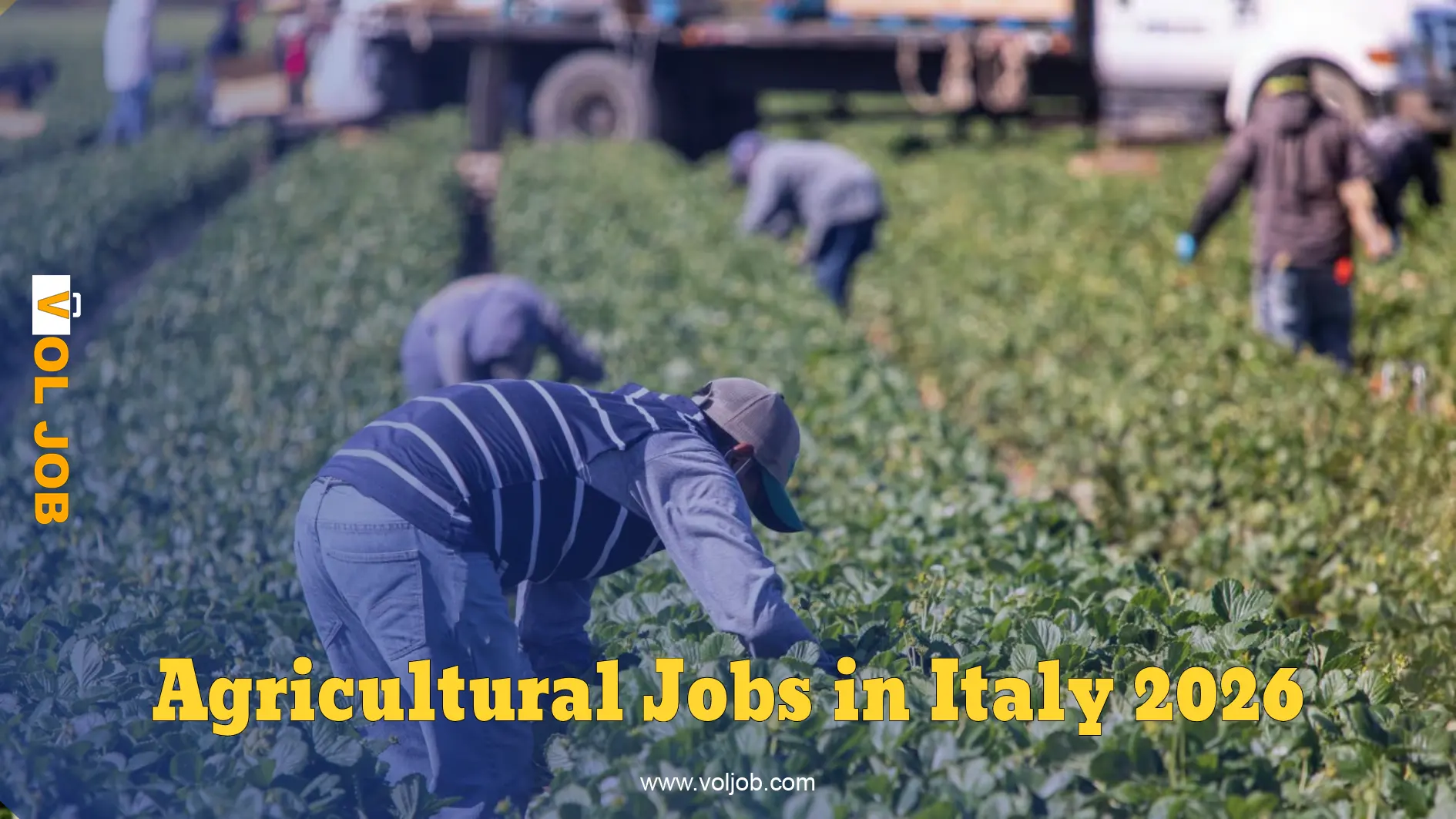
If you are looking for a genuine job opportunity in Europe, the agricultural sector in Italy is one of the most attractive sectors for foreign labor annually. Italian farms rely heavily on migrant workers during the harvesting and planting seasons, which has prompted the Italian government to open formal recruitment through a legal mechanism known as the Flow Decree (Decreto Flussi). In this article, we detail everything you need to know: available occupations, allocated quotas, application dates, and the only authorized official channels.
What is the Flow Decree (Decreto Flussi)?
The Flow Decree is an Italian government law issued by presidential decree (DPCM) that determines the annual quotas for non-EU workers allowed to enter Italy for work. The latest decree issued is the DPCM dated October 2, 2025, published in the Italian Official Gazette on October 15, 2025, covering the years 2026, 2027, and 2028.
This system relies on what is known as Click Day, a specific day on which the online portal opens to receive employers’ applications. Applications are processed on a first-come, first-served basis until the quota is filled. The 2026 dates have been scheduled as follows:
- January 12, 2026, at 09:00: Seasonal agricultural work
- February 9, 2026, at 09:00: Seasonal work in the tourism and hospitality sector
- February 16, 2026, at 09:00: Non-seasonal work in various sectors
- February 18, 2026, at 09:00: Non-seasonal work and home care
Allocated Quotas for 2026
For 2026, the Italian government has set a total of 164,850 work permits distributed as follows:
- 88,000 permits for seasonal work in agriculture and tourism, of which 47,000 are allocated exclusively to the agricultural sector
- 25,000 permits for non-seasonal work for citizens of countries included in the bilateral agreements list
- 13,600 permits for the home care sector (open to all nationalities)
- Additional quotas for other sectors such as construction and transport
In-Demand Agricultural Occupations in Italy
Work in the Italian agricultural sector varies to include multiple tasks requiring different levels of experience:
- Harvester (Raccoglitore): Picking fruits like grapes, apples, and citrus, as well as vegetables during specific seasons.
- Pruner (Potatore): Pruning trees and vines, requiring precision and prior experience in plant care.
- Tractor Driver (Trattorista): Driving and operating agricultural machinery, requiring a specialized driver’s license.
- Greenhouse Worker (Serrista): Working inside greenhouses to grow and care for crops year-round.
- Irrigation Worker (Irrigatore): Managing and maintaining modern and traditional watering systems.
- Livestock Breeder (Allevatore): Caring for animals, feeding them, and cleaning stables.
If you are also looking for similar opportunities in other European countries, you can check out the job opportunity in France for forestry and woodland workers via ANAPEC.
Arab Countries Included in the 2026 Flow Decree
The Flow Decree requires the worker to be a citizen of a country listed in the bilateral agreements with Italy. Among the Arab countries officially included in the 2026-2028 decree are:
- Morocco
- Tunisia
- Algeria
- Egypt
- Sudan
- Jordan
- Mauritania
Important notice for Moroccan citizens: According to official instructions, the tacit approval system (silenzio assenso) does not apply to applications for Moroccan, Pakistani, Bangladeshi, and Sri Lankan workers. Issuing a work permit requires explicit approval from the Police Headquarters (Questura) and the Labor Inspectorate (INL).
How to Apply Through Official Channels
One of the most important things to know is that the worker does not submit the application themselves; instead, the Italian employer handles this on their behalf. The process goes through the following steps:
Step One: Finding an Italian Employer
Farms and employers can be searched through the official platforms of Italian agricultural associations, most notably:
- The Job in Country platform belonging to the Coldiretti association, the largest agricultural association in Italy.
- The AgriJob platform belonging to the Confagricoltura association.
Step Two: Applying on Click Day
The employer pre-fills the application and submits it on the scheduled date via the Servizi ALI portal of the Italian Ministry of the Interior to obtain the work clearance (Nulla Osta). Applications are processed on a first-come, first-served basis, and the agricultural quota was filled in less than eight hours during the last cycle.
Step Three: Visa and Travel
Once the work permit is obtained, it is sent to the Italian embassy in the worker’s home country, allowing the worker to apply for a seasonal work visa and complete the acquisition procedures. For more about job opportunities in Europe through official channels, you can browse the recruitment agencies section on our website.
Important Tips Before Applying
- Avoid unauthorized intermediaries: Do not pay money to individuals or offices claiming to provide guaranteed work contracts. Official procedures are carried out exclusively through employers and Italian ministries.
- Learn basic Italian: Knowing basic agricultural terms facilitates communication and increases your chances of acceptance.
- Prepare your documents early: A valid passport, experience certificates (if any), and residency documents are necessary to complete the visa file.
- Follow official updates: Regularly visit the websites of the Italian Ministry of the Interior and the Ministry of Agriculture (MASAF) to stay informed of any changes.
Working in agriculture in Italy is a real opportunity for those who take the right path; the official channels are available, and the quotas are substantial. The key is early preparation and finding a reliable employer before Click Day. If you are looking for job opportunities in other European countries, feel free to browse the vocational training opportunities in Germany via ANAPEC or follow the latest job offers in the private sector.
Frequently Asked Questions About Agricultural Work in Italy 2026
Can I apply for the Flow Decree on my own without an employer?
No, the worker cannot submit the application themselves. The legal procedures require the Italian employer to submit the work clearance application (Nulla Osta) on your behalf through the Italian Ministry of the Interior’s online portal on the designated Click Day.
What is the “Click Day” system and how does it affect my chances?
It is a specific day when the Italian authorities open the portal to receive applications online. Applications are processed on a first-come, first-served basis. Due to high demand, allocated quotas for sectors like agriculture can be filled within a few hours, making early preparation with the employer essential.
Is proficiency in the Italian language required to work on farms?
While proficiency in Italian is not legally required to obtain a visa, knowing the basics of the language and essential agricultural terms is a significant advantage that facilitates communication with your employer and increases your chances of acceptance.
Which Arab countries are eligible to apply for 2026?
The Arab countries officially included in the bilateral agreements for the Flow Decree (2026-2028) are: Morocco, Tunisia, Algeria, Egypt, Sudan, Jordan, and Mauritania.