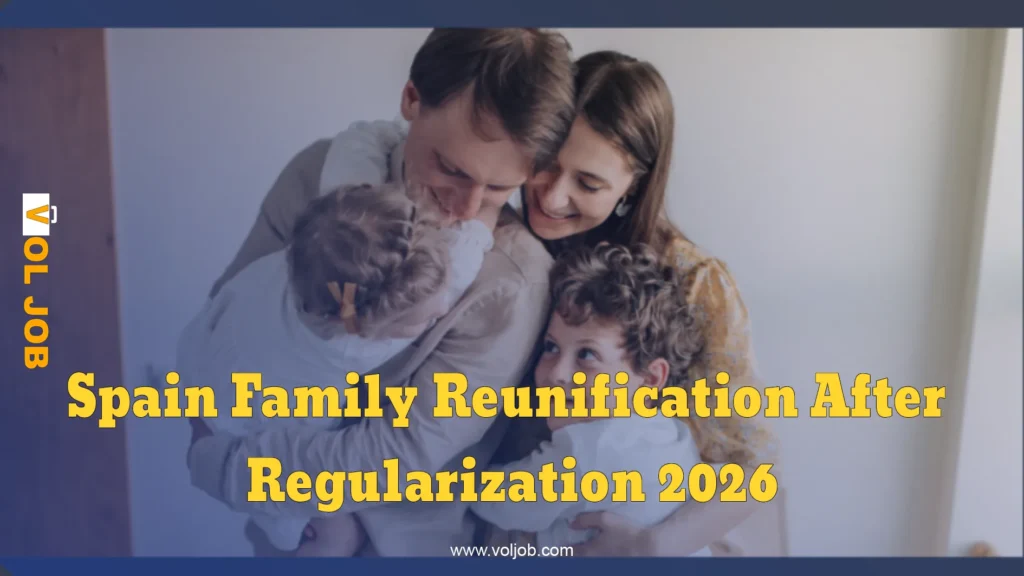
Spain Family Reunification After Regularization 2026: Conditions, Procedures, and Key Updates

Obtaining legal residency in Spain through the country’s large-scale regularization process marks the beginning of a new chapter for many immigrants. However, bringing family members to Spain is not possible immediately after receiving the first residence permit. Spanish law sets out specific conditions and legal procedures that must be met before submitting a family reunification application.
Many Moroccan nationals who have benefited from the regularization process are now seeking information about how and when they can reunite with their spouses and children, as well as the latest updates issued by the Spanish authorities regarding residence permits and required documentation.
First, beneficiaries cannot apply for family reunification immediately after obtaining their initial residence card. Under Spanish immigration law, applicants must complete one full year of legal residence in Spain before becoming eligible to submit a family reunification request. The application must also be filed at the same time as the first renewal of the residence permit.
This requirement is intended to ensure that the resident has established a stable legal status and is financially capable of supporting family members after they arrive in Spain. In other words, receiving the first residence permit does not automatically grant the right to bring relatives to the country.
During the first year of residence, beneficiaries are expected to maintain their legal status by remaining employed or demonstrating a stable source of income. They must also comply with all immigration requirements to avoid any difficulties when renewing their residence permit or applying for family reunification.
Spanish authorities also require applicants to have a stable employment contract or sufficient financial resources to support their family without relying on public assistance. In addition, they must provide suitable housing that meets the legal standards for accommodating family members.
Before approving the application, local authorities may inspect or evaluate the accommodation to confirm that it offers adequate living conditions and enough space for the number of relatives who will join the resident in Spain.
Family reunification generally covers a husband or wife, a legally registered partner, and children under the age of 18, whether biological or legally adopted.
Spanish law also allows adult children to be included if they have a disability that prevents them from living independently, provided that the necessary medical and legal documentation is submitted.
In exceptional cases, adult children may also qualify for family reunification if the resident in Spain has officially been recognized as requiring care under Spain’s Dependency Law. These applications are assessed individually by the relevant immigration authorities.
It is important to note that all foreign documents submitted as part of the application—such as marriage certificates and birth certificates—must be officially translated into Spanish by a sworn translator and properly legalized or authenticated in accordance with Spanish regulations before they can be accepted.
Once the application has been reviewed, the Spanish authorities will notify the applicant of their decision. If approved, family members must apply for a family reunification visa at the Spanish consulate in their country of residence before traveling to Spain to complete the residence permit process.
To simplify administrative procedures, the Spanish authorities have also introduced new guidelines concerning the issuance of biometric residence cards. Under these measures, immigrants can complete the fingerprint registration process even if their passports have expired or they are experiencing difficulties renewing them through their country’s consular authorities.
This decision aims to address problems faced by many immigrants whose passport renewal appointments have been significantly delayed, preventing them from completing residence procedures despite already receiving approval for their legal status.
For asylum seekers who have been granted residence through the regularization process, an additional requirement applies. They must formally withdraw their asylum application—or any appeal related to it—before booking a fingerprint appointment for their residence card.
This withdrawal must be completed electronically through the online portal of Spain’s Office for Asylum and Refugees. However, applicants are strongly advised not to withdraw their asylum request until they have received the final approval decision regarding their regularization, as doing so earlier could affect their legal status.
Regarding criminal record certificates, the Spanish authorities have clarified that applicants who are unable to obtain the document from their home country must first submit an official request and wait for one month.
If the certificate is still unavailable after that period, applicants may submit a sworn declaration stating that they have no criminal convictions. This allows the Spanish administration to continue processing the application while attempting to obtain the certificate directly from the authorities of the applicant’s country of origin.
Spanish authorities may continue these efforts for up to three months. If the document still cannot be obtained, the applicant will be granted a final 15-day deadline to submit the criminal record certificate personally. Failure to do so may result in the application being suspended or archived until all required documents are provided.
Immigration specialists emphasize that respecting legal deadlines and submitting complete and accurate documentation can significantly speed up the processing of applications. They also advise applicants to keep copies of all residence-related documents and official notifications while regularly following updates issued by the Spanish authorities, as immigration procedures may be modified or simplified over time.
For Moroccan nationals benefiting from Spain’s regularization program, meeting these requirements during the first year of residence will make it easier to apply for family reunification as soon as they become eligible. It also increases the likelihood of obtaining approval without unnecessary delays, allowing families to reunite and begin a stable life together in Spain in accordance with Spanish immigration law.
Read Also: New Brunswick Canada Immigration and Work Guide 2026: Requirements, Eligibility Key Dates