Decreto Flussi 2026–2028: Your Complete Guide to Italy’s Work Visa Opportunities
Decreto Flussi 2026 Ultimate Step-by-Step Guide to Italy Immigration Registration

The Decreto Flussi is an Italian government decree that sets annual quotas for non-EU citizens entering Italy for work. It covers seasonal and non-seasonal employment, self-employment, and certain changes from other residence permit categories to work permits.
The decree sets the number of available places and the rules for applying. Meeting the basic requirements does not guarantee approval: applications are subject to the relevant quota and review by the Italian authorities.
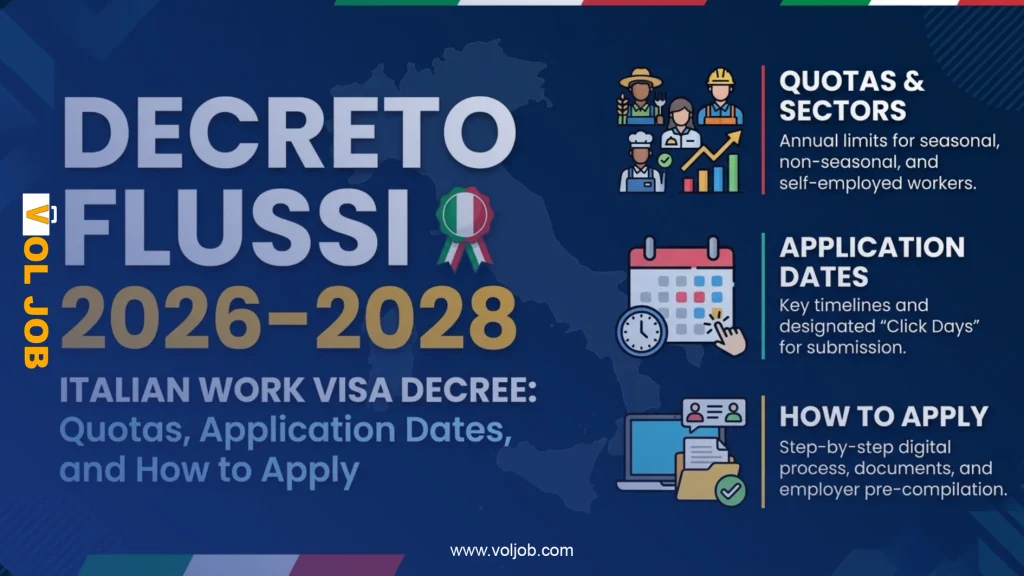
Decreto Flussi 2026–2028: 2027 quotas
The 2026–2028 decree also sets quotas for 2027. According to the latest information published by ItaliaHello, these include:
- 76,200 places for non-seasonal employment, including 14,000 for family care work, such as caregiving and domestic work.
- 89,000 places for seasonal work in agriculture and tourism.
- 650 places for self-employment.
The page also notes that, from 2027, citizens of Kenya can apply under the program.
These figures apply to 2027. They should not be confused with the quotas or application dates for 2026.
Latest application preparation dates
For the next application cycle, the online pre-filling period is scheduled to run:
- From 9:00 a.m. on October 23, 2026
- Until 8:00 p.m. on December 7, 2026
The portal is then scheduled to reopen from 9:00 a.m. on December 9 until 8:00 p.m. on December 13, 2026.
During this second period, applicants cannot create new applications. They can review information added to an application by the system and save it so its status changes to “to be sent.” An application that has not been saved in this status cannot be submitted on the Click Day.
The ItaliaHello update does not provide the Click Day dates for this upcoming cycle. Check the Italian Ministry of the Interior’s portal for confirmed submission dates. The January and February 2026 Click Day dates previously listed in this article relate to an earlier cycle and have passed.
Who submits the application?
The person responsible for submitting the application depends on the type of work:
- For seasonal and non-seasonal employment, the employer submits the application. An employers’ association or authorized professional may help with the process.
- For self-employment and residence permit conversions, the applicant submits the application.
Applications are submitted online through the Italian Ministry of the Interior’s ALI Services Portal. Access requires a digital identity: SPID or CIE.
How the application process works
1. Check the requirements and available quota
Before preparing an application, confirm that the job category is covered by the decree and that a quota is available. The employer and applicant should check the current rules for the relevant category.
2. Prepare the application online
During the pre-filling period, the employer or applicant completes the appropriate form in the Ministry of the Interior’s portal. For employment applications, the employer is responsible for the submission, even if someone assists with preparing it.
3. Save the application before the submission date
When the portal reopens in December, review any information added by the system and save the application. It must show the status “to be sent” to be eligible for submission on the relevant Click Day.
4. Submit the application on the confirmed Click Day
The Click Day is the designated date for sending applications in a particular category. The available information cited here does not give the upcoming Click Day dates, so applicants should check the Ministry’s portal for official announcements.
5. Wait for the immigration office’s decision
The One-Stop Shop for Immigration (Sportello Unico per l’Immigrazione) reviews the application. If approved, the applicant receives a nulla osta, or work authorization. The applicant can then apply for a work visa at the Italian embassy or consulate in their country.
A nulla osta is valid for six months. The worker must enter Italy within that period.
6. Complete the required steps after arriving in Italy
After entering Italy, the worker and employer must sign the residence contract within 15 days. Within the same deadline, the employer submits it online to the One-Stop Shop to request the worker’s residence permit.
Read Also: Register for DESTINATION CANADA EDUCATION 2025
New deadlines for the nulla osta process
ItaliaHello also reports a deadline concerning confirmation of the nulla osta request. After the One-Stop Shop completes its checks on the visa application, the employer has 15 days to confirm the request. If the employer does not confirm it within that period, the request is considered refused; an already issued nulla osta may be revoked.
The employer must inform the worker promptly about updates to the nulla osta procedure.
What if an application is refused?
If an application is refused, the applicant cannot use it to obtain a work visa through that request. The refusal may relate to eligibility, documents, or quota availability. Applicants should follow the instructions in the official decision and seek advice from a qualified support service if they need help understanding the outcome.
People seeking international protection follow a separate procedure and do not apply through the Decreto Flussi process.
Where to get help
People already in Italy can ask their municipality’s immigration office or contact a patronato, an assistance office that supports workers and migrants.
For application access and official updates, use the ALI Services Portal of the Italian Ministry of the Interior. For general guidance about the decree and the latest dates, see ItaliaHello’s Decreto Flussi guide.
Key dates at a glance
| Stage | Date |
|---|---|
| Pre-filling begins | October 23, 2026, at 9:00 a.m. |
| Pre-filling ends | December 7, 2026, at 8:00 p.m. |
| Portal reopens to review and save applications | December 9, 2026, at 9:00 a.m. |
| Portal closes | December 13, 2026, at 8:00 p.m. |
| Upcoming Click Day dates | Not stated in the cited ItaliaHello update |
Final reminder
The Decreto Flussi process has different quotas and rules for each work category. The preparation dates above concern the upcoming application cycle, while the January and February 2026 submission dates belong to an earlier cycle. Always confirm the latest instructions and Click Day dates on the Italian Ministry of the Interior’s portal before applying.
Read Also: Schengen Visa 2026 – Important Changes You Must Know About the New System





January 12, 2026: For seasonal agricultural work
Grazie per questo lavoro e spero che accetterete la mia richiesta.
i whant a work please
Abhat fimhal filaha chifor traktor
Tout ha hna Hhu de journée cordialement Hélène voici
[email protected]
العمل الأسري الرعاية
السلام عليكم اخواني وأخواتي أن إسم عبد الغفيور من المغرب مدينة آسفي عمري 22سنة ابحث عن عمال خرج المغرب عند خبير في مجال الفلاح والزعيةه عندي شواهد وديبلومات رقم التواصل مع عبر الوتساب والمكالمات مرحبا هو الرقم 0630014606وشكران
I specialize in the field of construction.
Mahtm
Thank you for this work, and I hope you will accept my request.
Grazie per questo lavoro e spero che accetterete la mia richiesta.